The full essays live on the DataDunkNBA newsletter. This library sorts them by topic and links each one to the metric, team page and data behind it, so you can find the right piece and see the numbers it rests on.
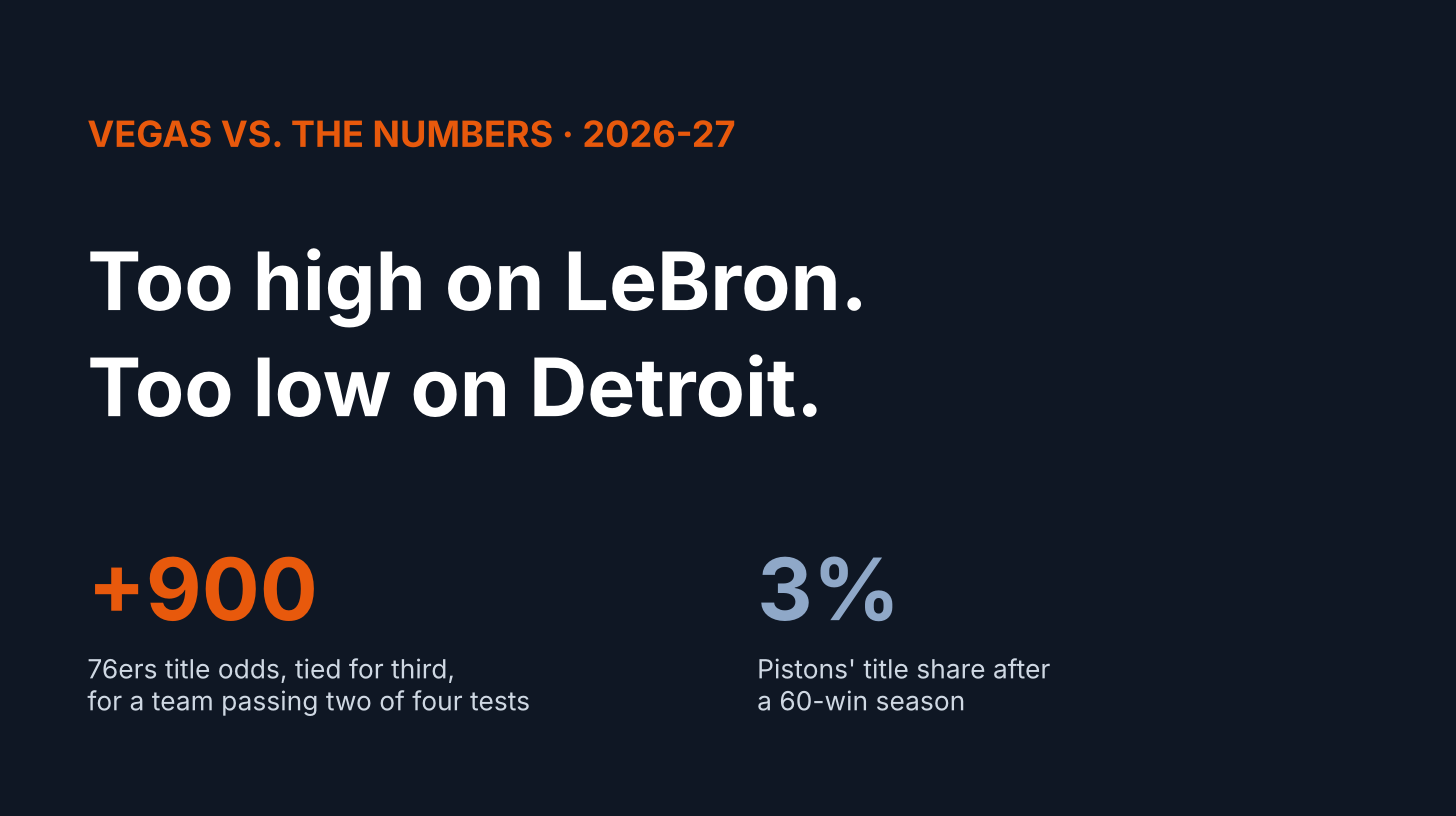
Win totals for all 30 teams, MVP to Sixth Man, All-Stars and All-NBA, checked against the sportsbooks. The biggest breaks: too high on LeBron's 76ers, too low on Detroit.
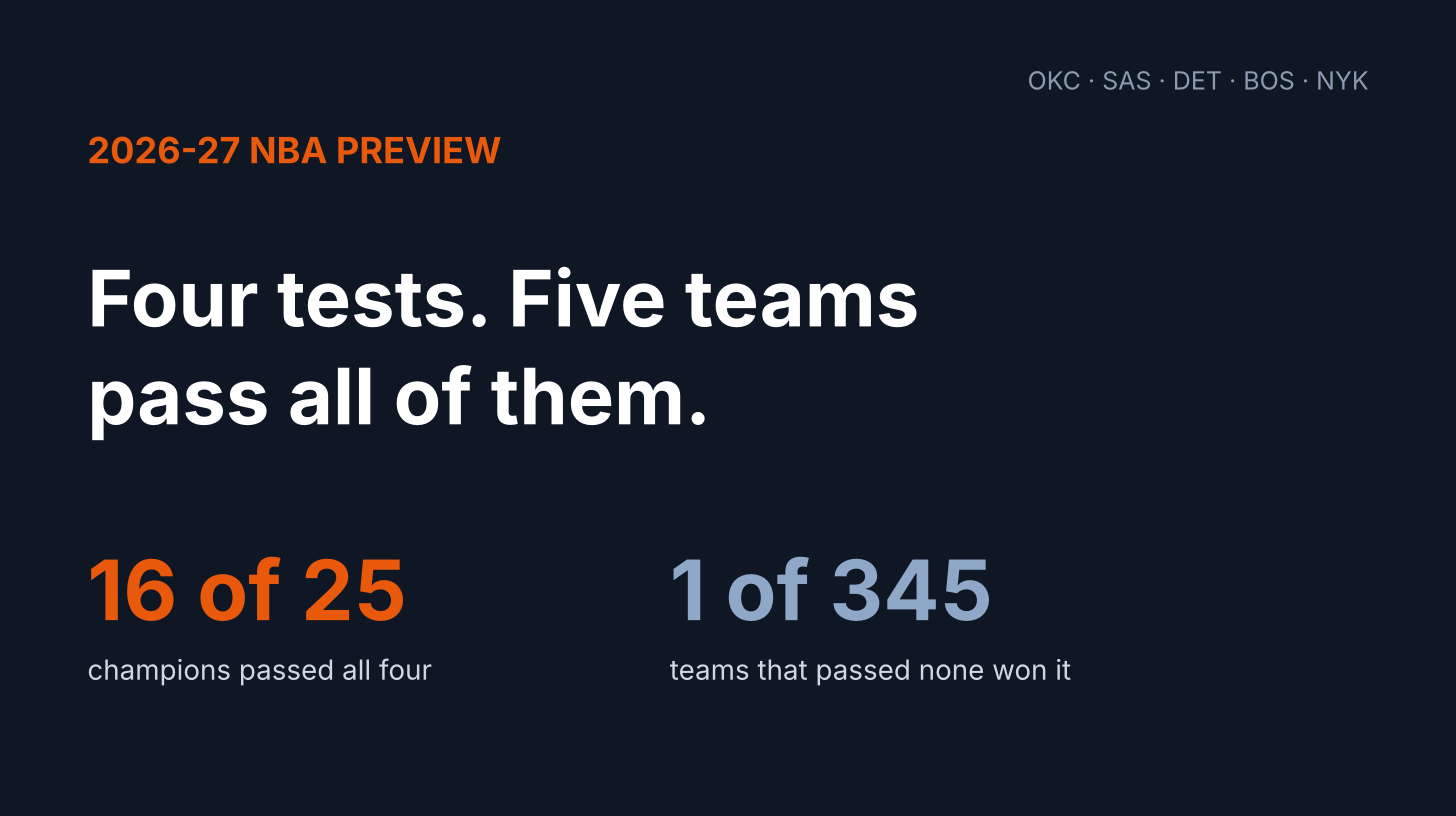
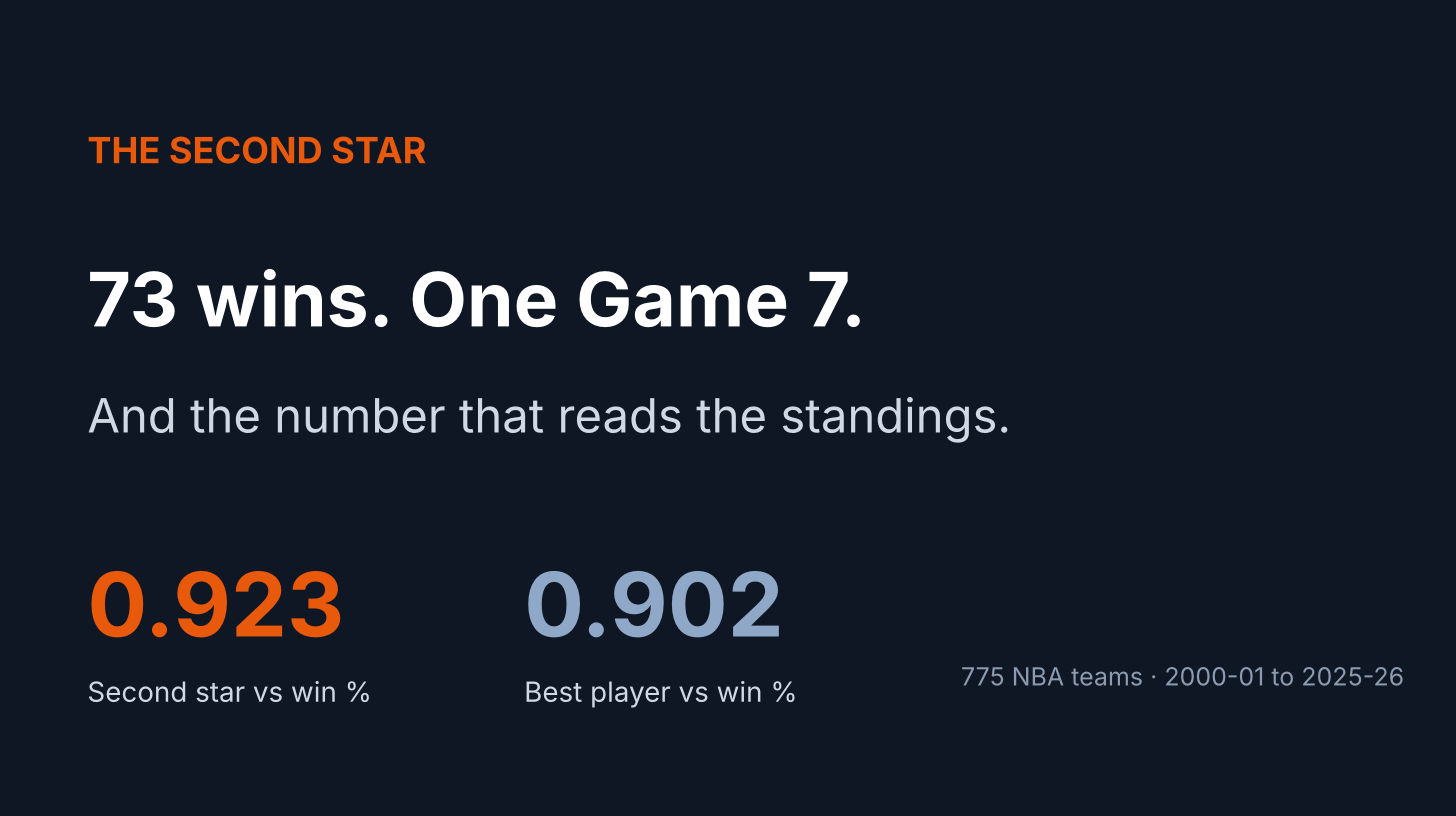
A 1.73 player, a second one, a top-10 net rating and a top-10 defense. Since 2001-02, teams that checked all four boxes before the season won 16 titles, and teams that checked none won one. Here are all 30 teams.
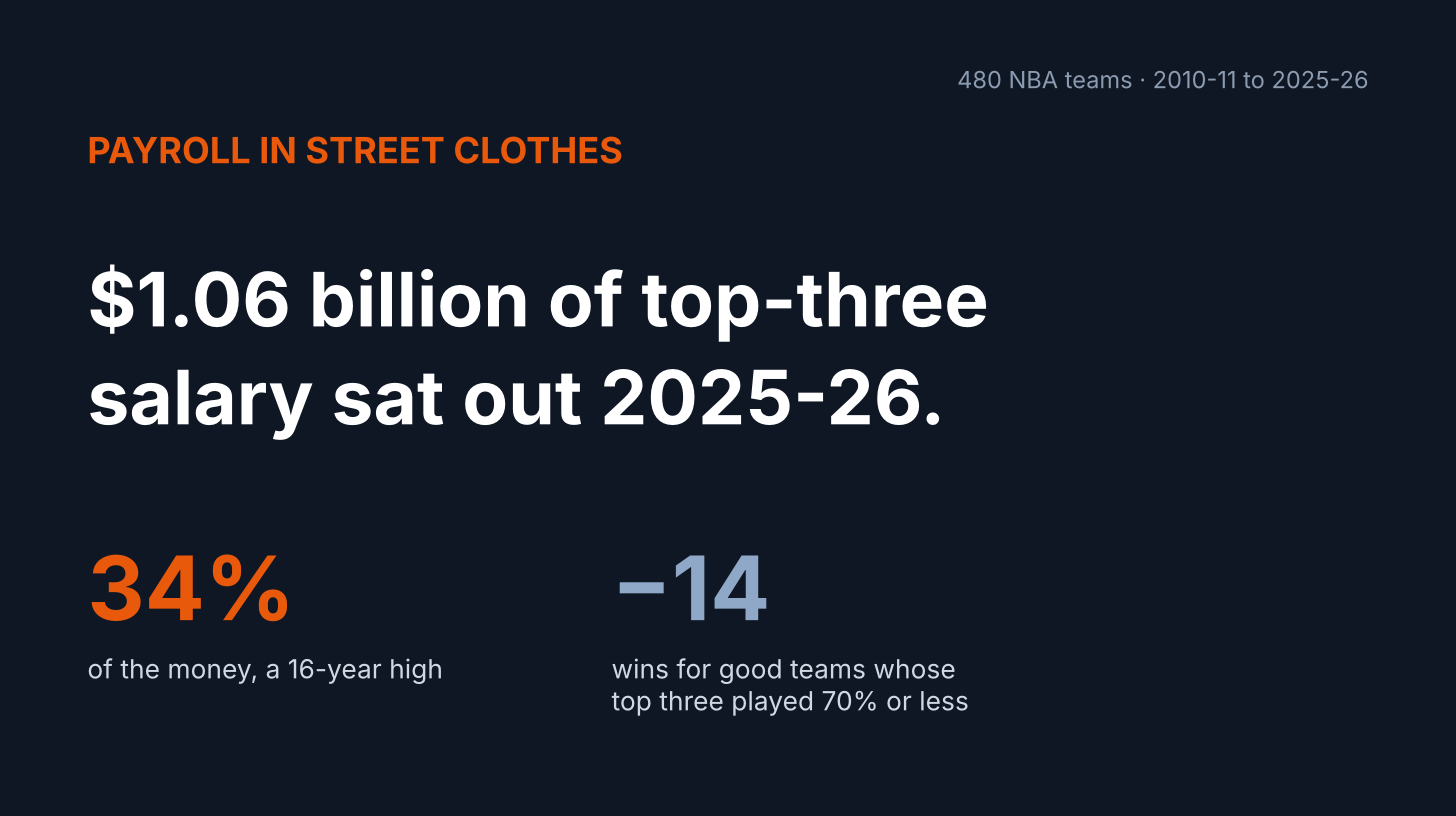
The three biggest contracts on every team cost $3.15 billion, and $1.06 billion of it paid for games those players didn't play. Across 480 teams since 2010-11, the bill shows up in the standings, and it's hardest on the good ones.
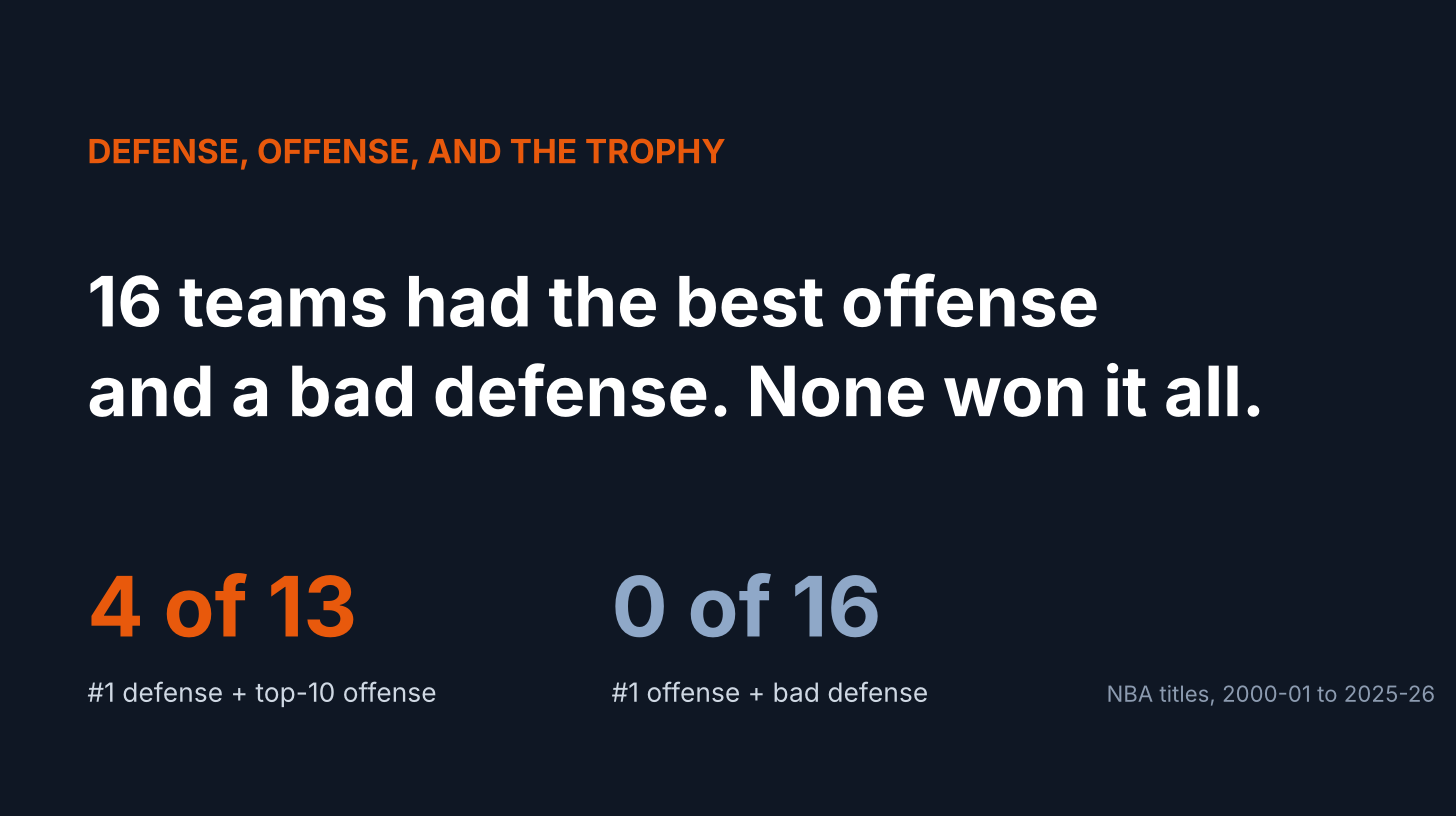
"Defense wins championships" is half right. Champions are balanced, but the league's best defense has turned into a title far more often than its best offense.
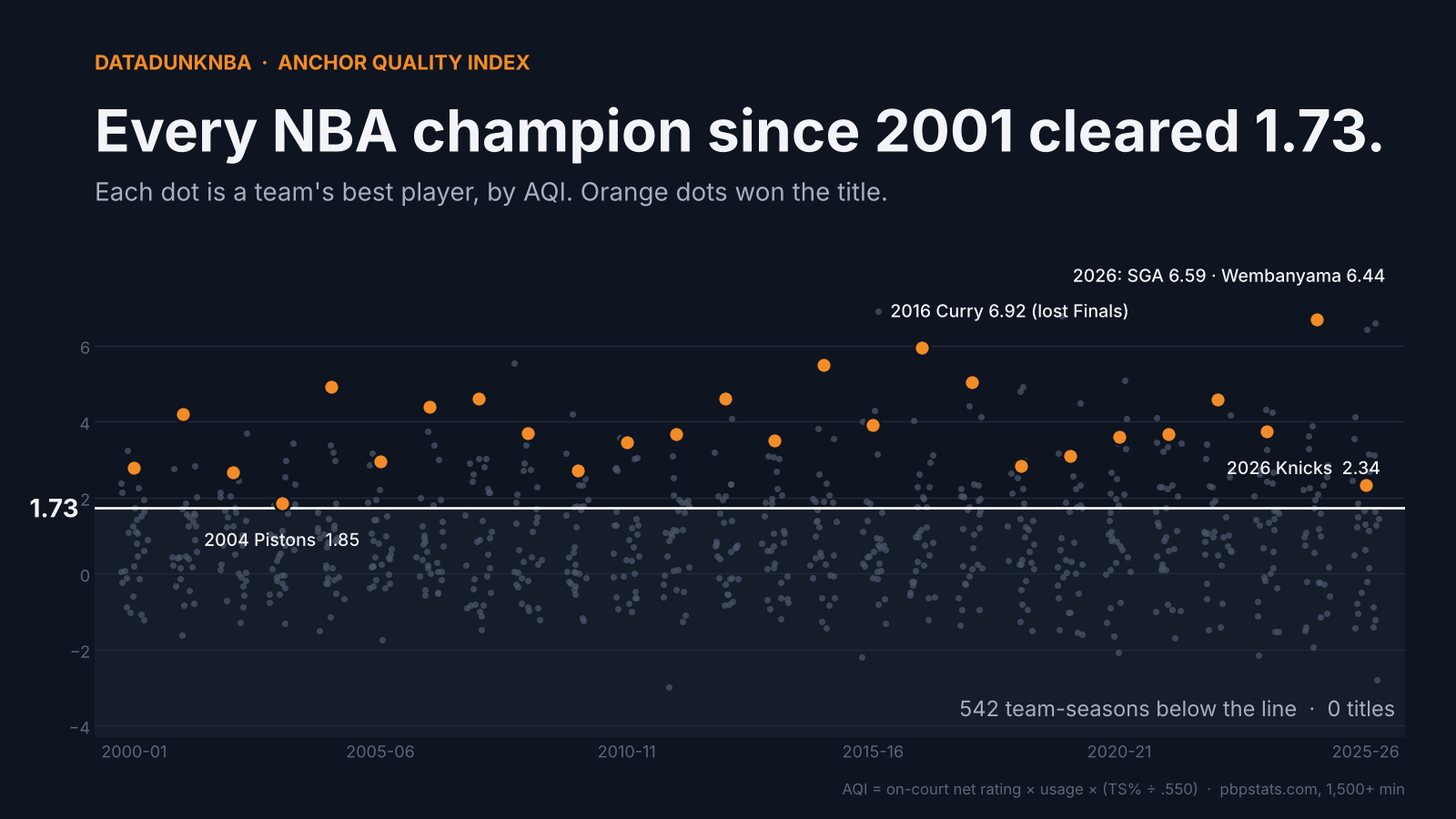
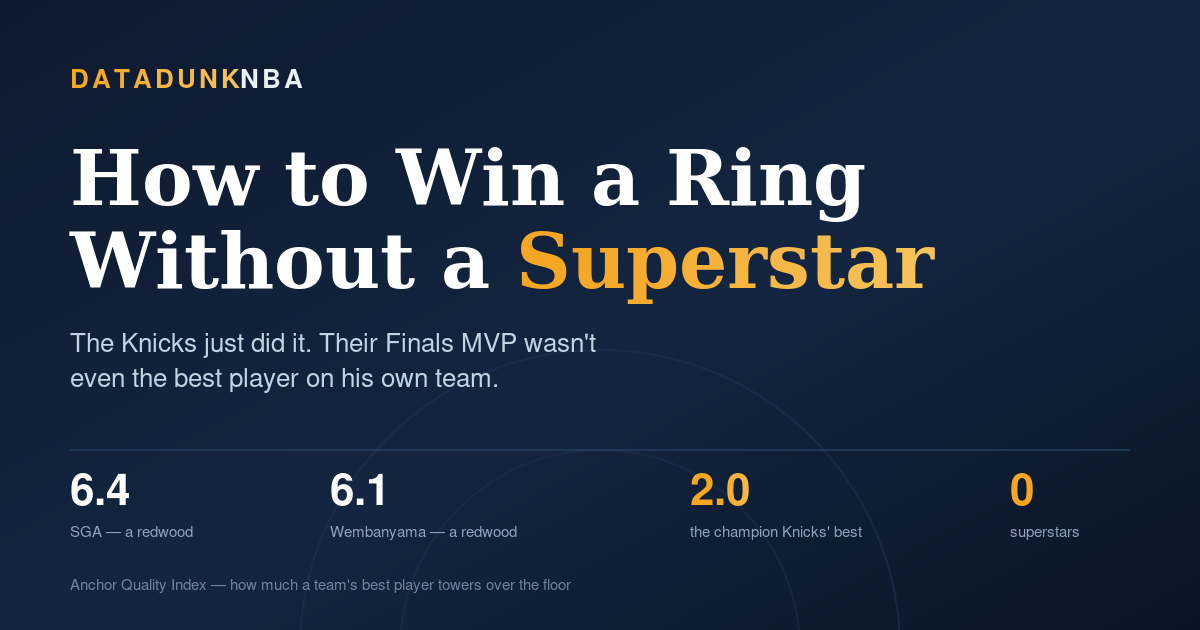
The Anchor Quality Index from scratch: what one number says about who gets to play for a title, what 26 champions had in common, and what moving Giannis, Kawhi, Jaylen Brown and LaMelo Ball did to the race.
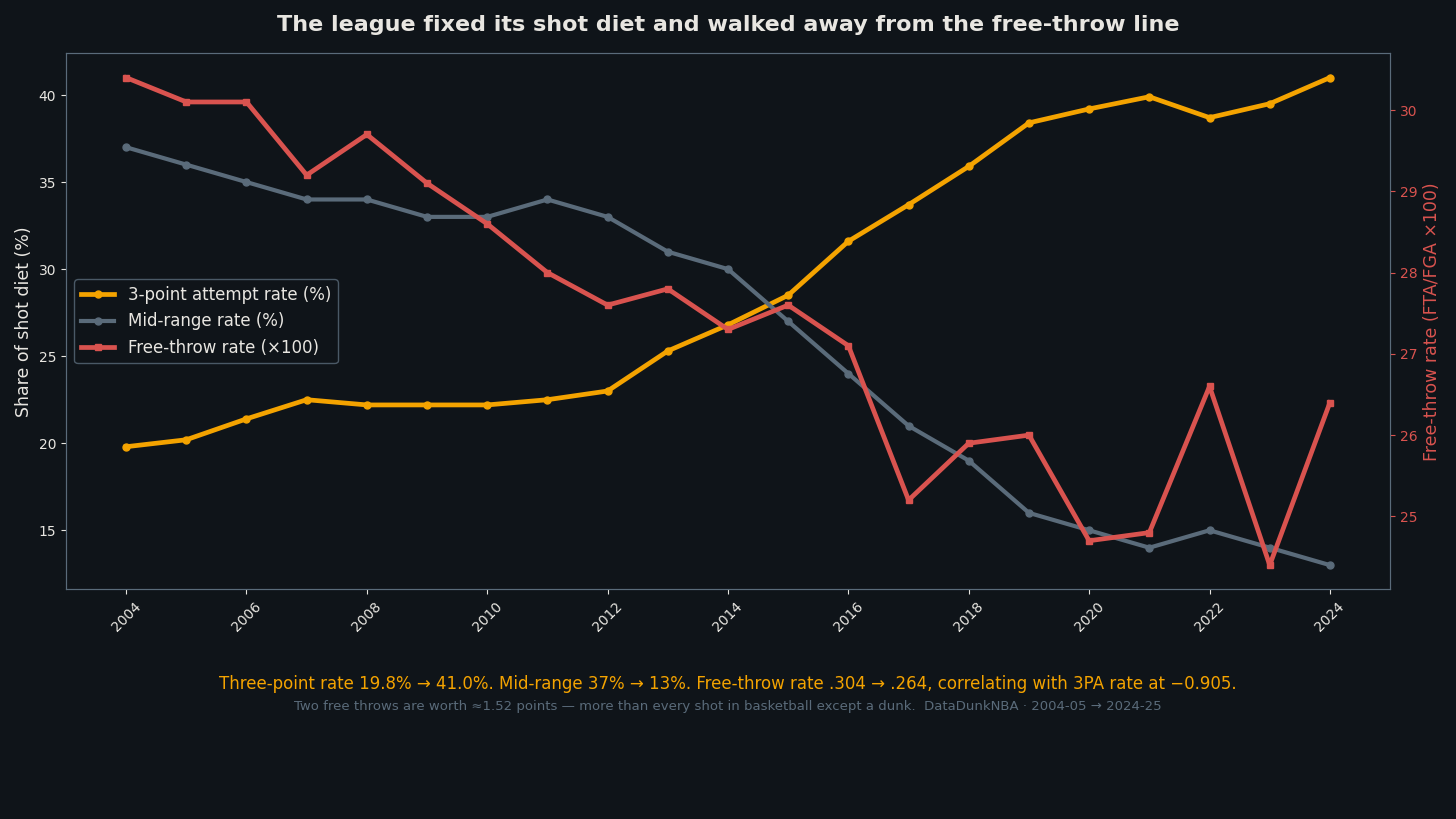
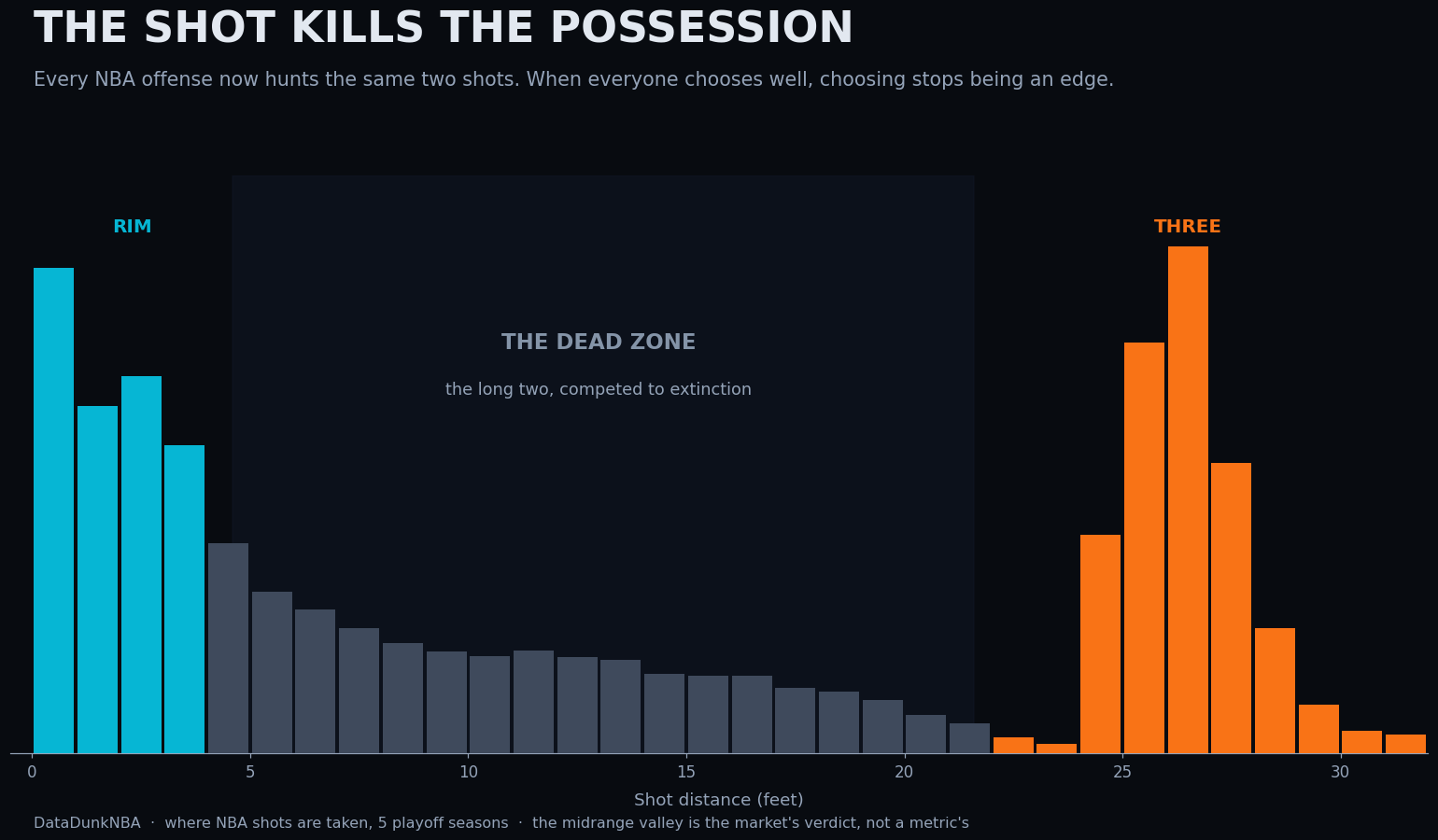
A shot is worth its points and costs everything else the possession could still have become. We built the number that measures the trade — and got the answer we least wanted.
Possibility Cost, Part I — Why every shot in basketball history has a hidden price tag, and what a French essayist in 1850 understood about it before any of us.
Possibility Cost, Part II — How a Hungarian polymath, a Princeton grad student, a RAND researcher, and a DeepMind algorithm quietly built every piece of mathematics we needed to describe what every gr
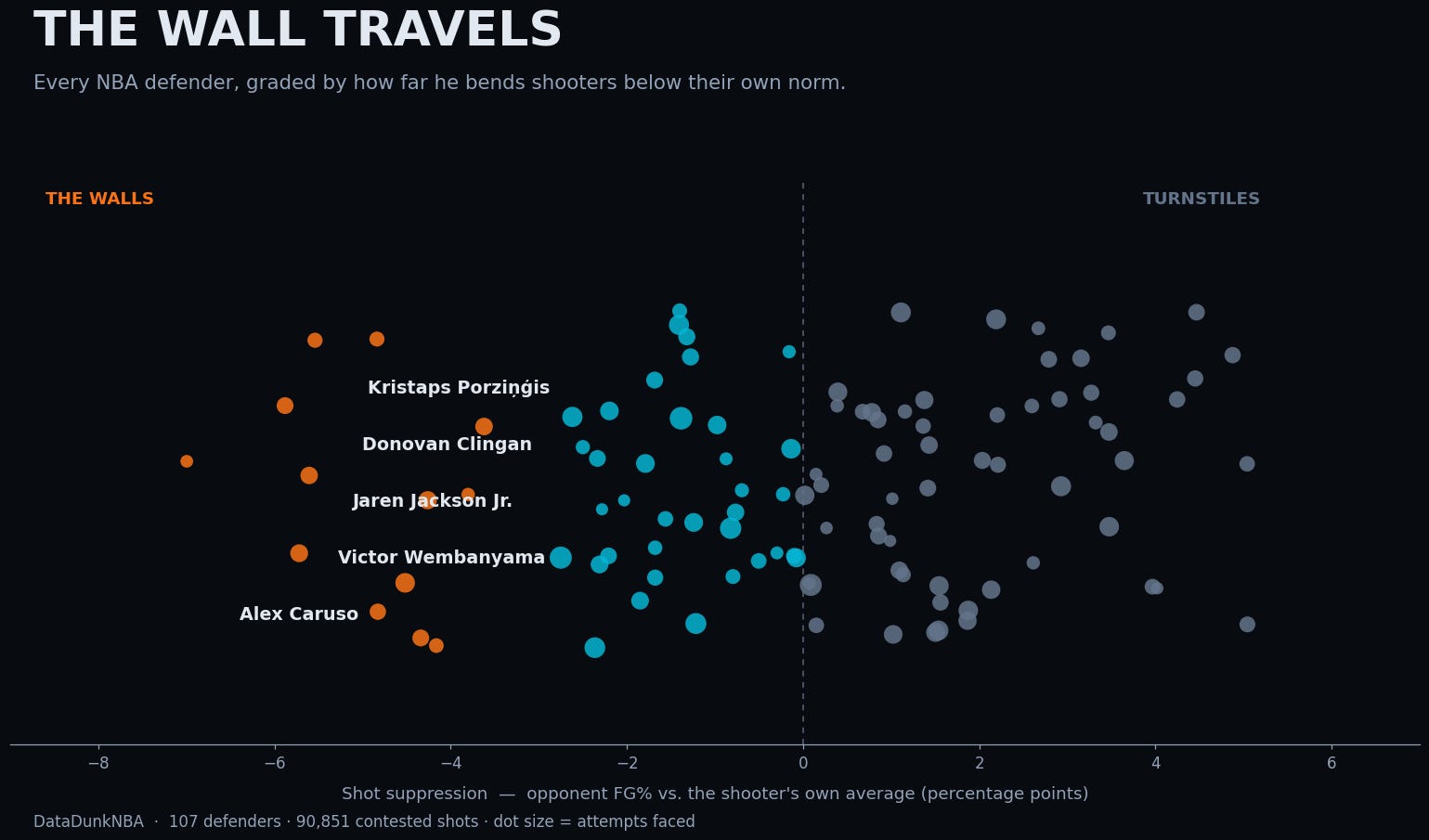
The most valuable play in basketball never reaches the box score. A precise, tested definition of rim protection — and why it travels with the player, not the scheme.
One text message about NBA analytics deserved a full answer. On the lumping problem, Possession Sovereignty, and why the next wave of basketball analytics changes everything. | DataDunkNBA Special Edition
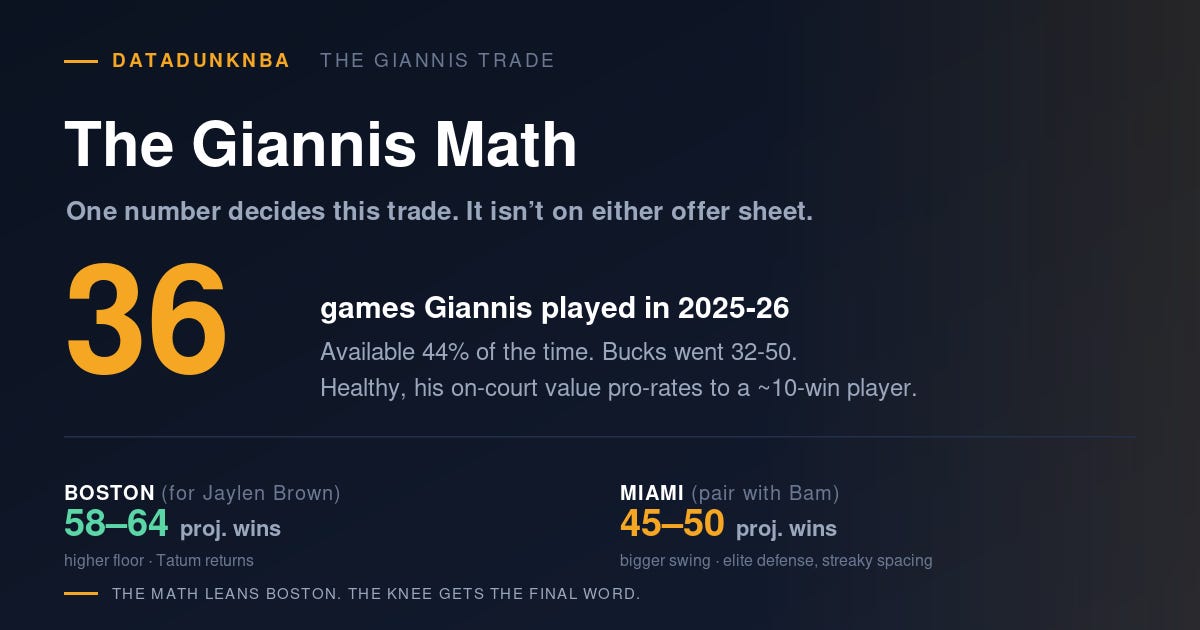
One number decides this trade, and it isn't on either offer sheet. It's 36 — the games Giannis played last year. He was available 44% of the time. Everything else is noise.
Drafted 33rd. 6'2". Just dropped 30 in his Finals debut on a tweaked knee. Closed Game 1 on an 11-0 run. An analytical ode to the slowest fast player in basketball.
The Knicks' Swiss Army knife says analytics are useless. The Knicks are going to the 2026 NBA Finals. Both are true. An analytics love letter to Josh Hart, featuring the Andre Iguodala comp Mike Brown
Possibility Cost, Part III — From Magic Johnson to Nikola Jokic, a roll call of the small handful of players who intuited the math so completely they didn't need the formula. Plus a viewing toolkit so
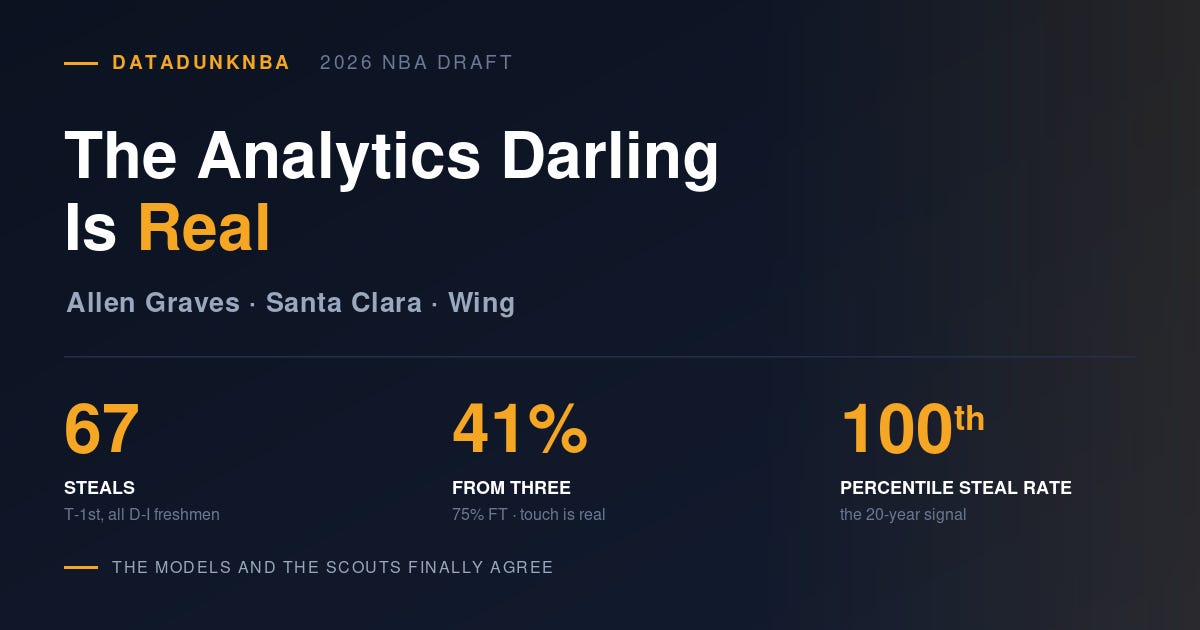
A Santa Clara bench player led every freshman in America in steals, shot 41% from three, and blocks like a center. The models and the scouts finally agree.
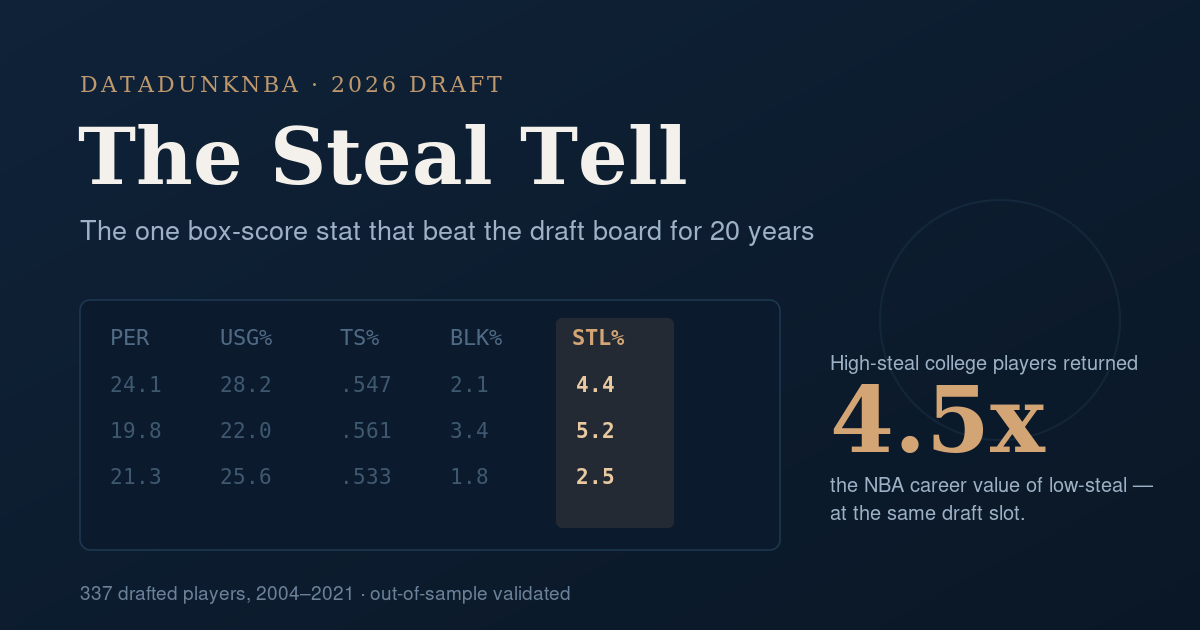
One overlooked box-score number predicts NBA careers better than the draft slot itself — and it grades the consensus No. 1 below average, with the kid sliding to No. 3 as the best prospect on the boar
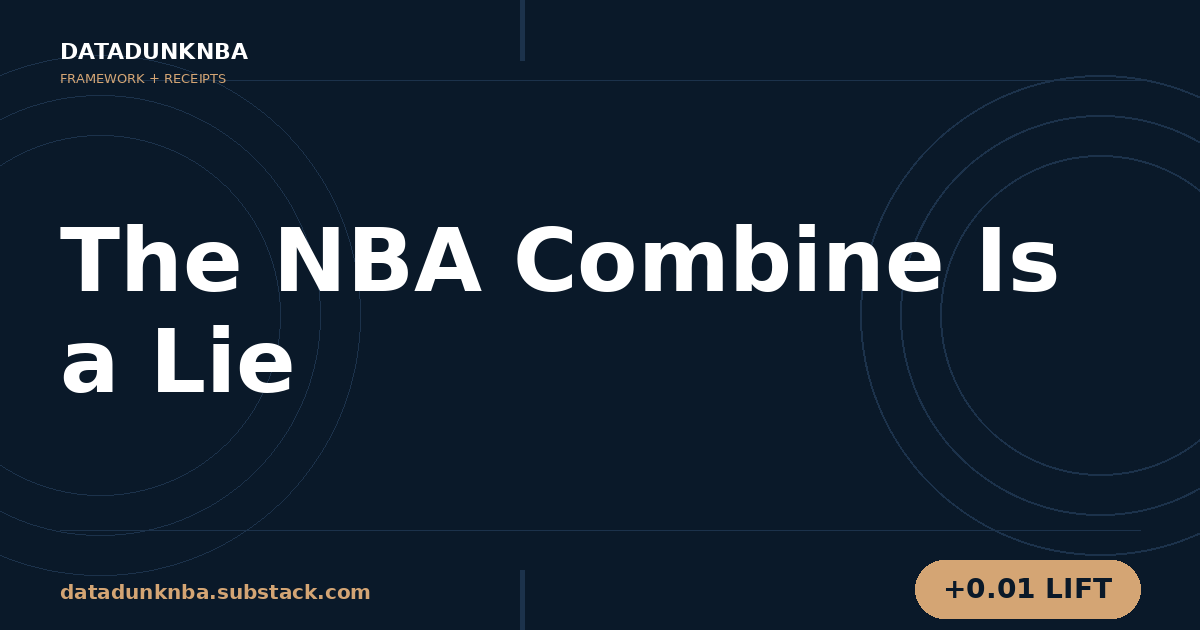
Twenty years of wingspan, vertical leap, and body fat data. Added to every prediction model for NBA careers. Total improvement over just knowing the draft pick: one one-hundredth of a correlation point.